



Your first appointment
Your first visit.
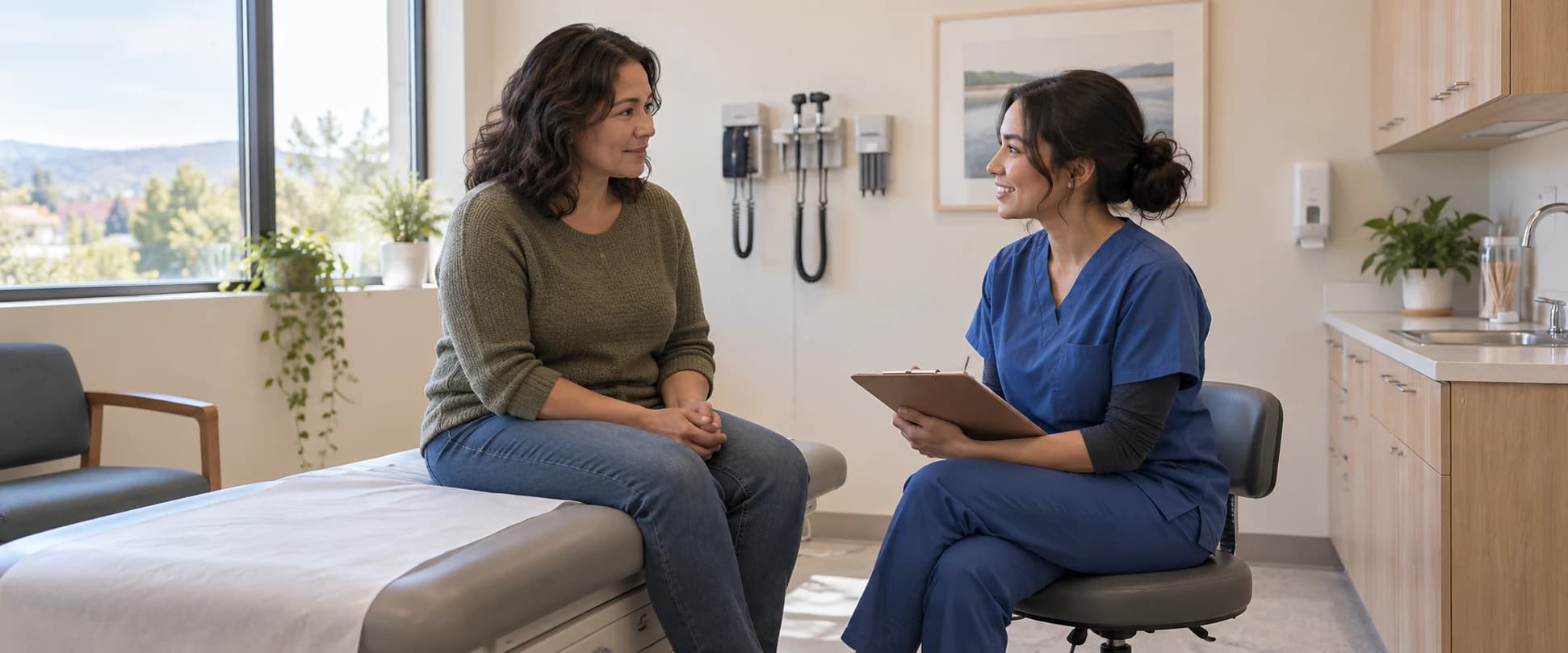
Start with a call. We help you prepare, then examine your injuries and explain the next steps. Plan for 60 to 90 minutes at your first appointment.
- Prepare
- Arrival
- Evaluation
- Plan review
- After the visit
Step 01 · Prepare
One call starts the visit.
Call to arrange your first appointment. Share what happened, what hurts, and any care you have already received. The intake team can tell you what information to bring.
Our physicians see patients by appointment only, and we don't keep medications on site.
Bring these items if you have them. Your symptom list matters even when something seems minor.
Bring what you have.
- Photo ID
- Auto and health insurance information
- Police report or case number, if you have one
- Emergency or urgent care records
- A list of every symptom you are experiencing
Step 02 · Arrival
Check in and tell us what changed.
At check-in, you complete forms about the collision, your medical history, and your current symptoms. Bring any emergency or urgent care records you already have.
Your account helps the clinician connect the collision with what you are feeling now. Include symptoms that appeared later, even if they feel unrelated.

Step 03 · Evaluation
The examination checks movement and nerve function.
The clinician asks how the collision happened and reviews your symptoms and medical history. The examination then checks the places an impact can affect.
Movement and tenderness
Neck and back movement, tenderness, posture, and joint function help show where motion is limited or painful.Shoulders, arms, hips, and legs
The examination also checks the limbs. Pain in one area can be connected to another injury.Nerve signals
Reflexes, sensation, and strength help identify possible nerve involvement. If a concussion is suspected, the clinician may check memory and concentration.What the findings mean
The findings guide whether imaging or a specialist referral is needed. Your symptoms form a baseline for later visits.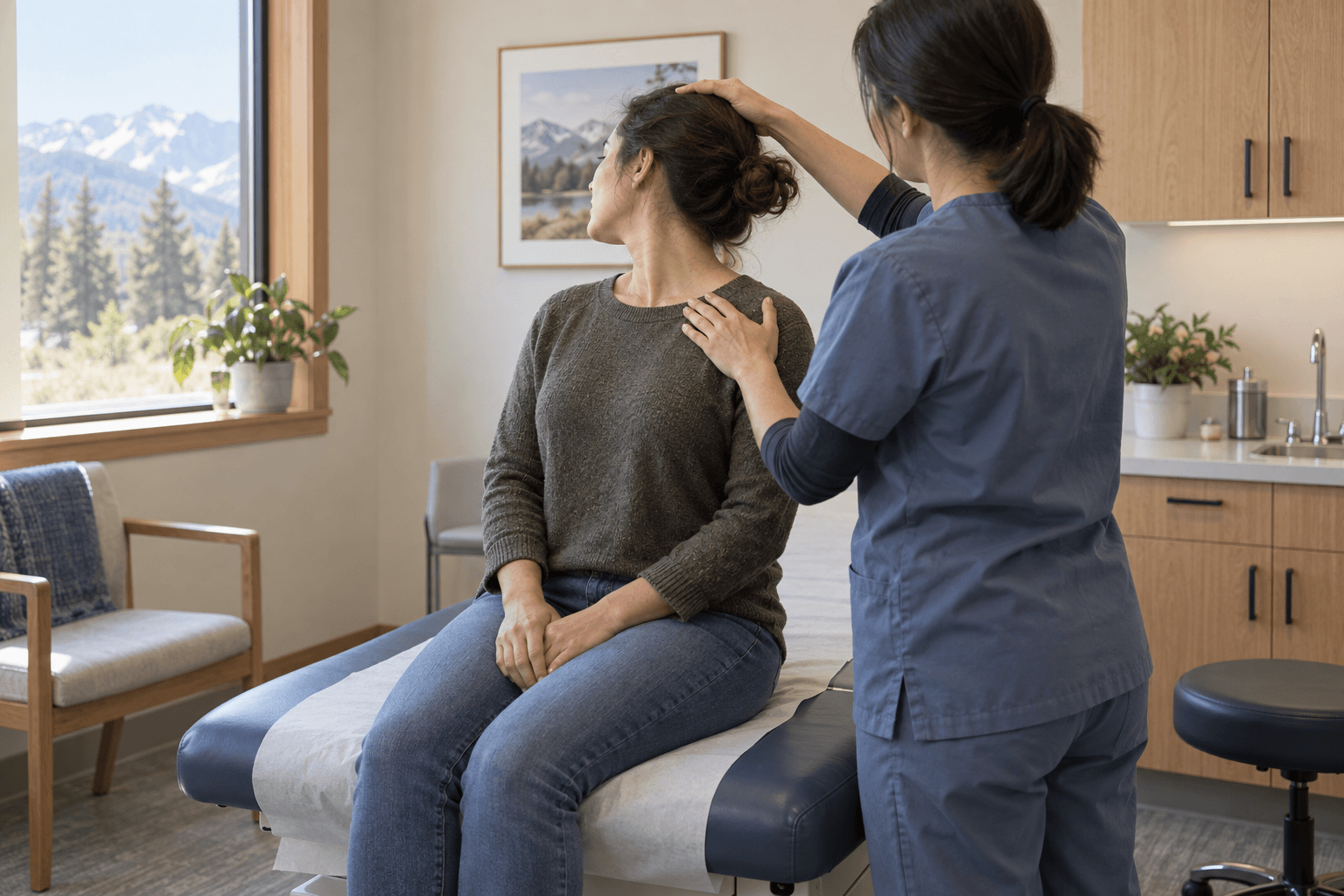
Step 04 · Plan review
The plan names your next steps.
Your physician explains what the examination found and which treatments fit those findings. The plan covers what happens next, how often visits are recommended, and when the plan should be reviewed.
Physical therapy, massage therapy, imaging, or a specialist referral may be part of the plan when indicated. Your next appointments are arranged before you leave.

Step 05 · After the visit
The first weeks follow your response.
Treatment begins with the care recommended at your evaluation. At later visits, your symptoms and function are checked again. That gives the care team a way to see what is improving.
If something is not helping or a new symptom appears, the plan can change. There is no fixed number of visits for everyone.
Plan your arrival
Choose where to check in.
These four clinics accept new patients. Use the address and direct number for the clinic you choose.
Aurora
- Address
- 14231 E 4th Ave, Suite 1-100
Aurora, CO 80011 - Hours
- Monday to Thursday, 8:00 AM to 6:00 PM
- Clinic desk
- (303) 955-7258
Lakewood
- Address
- 605 Parfet St, Suite 104
Lakewood, CO 80215 - Hours
- Monday to Thursday, 8:00 AM to 6:00 PM
- Clinic desk
- (720) 750-6987
Loveland
- Address
- 295 E 29th St, Suite 130
Loveland, CO 80538 - Hours
- Monday to Thursday, 8:00 AM to 6:00 PM
- Clinic desk
- (970) 966-8389
Westminster
- Address
- 12071 N Tejon St, Building 4, Suite 300
Westminster, CO 80234 - Hours
- Monday to Thursday, 8:00 AM to 6:00 PM
- Clinic desk
- (720) 726-2901
Changing clinics. Ask about moving your records and plan if another clinic is more convenient. Colorado Springs provides continuing care for current patients only.