



Physician-led care
The Collision Physicians.
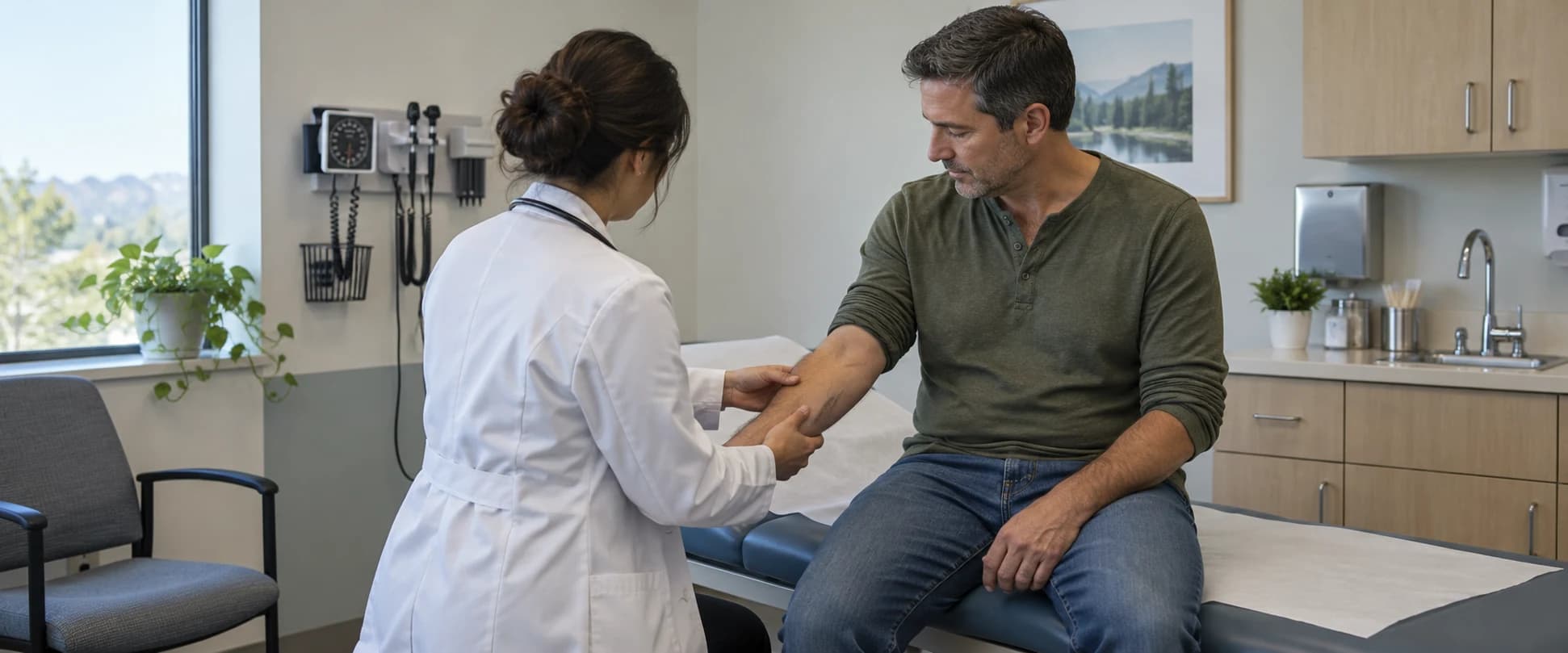
Your physician evaluates your injuries, chooses the next treatment steps, and reviews findings as care progresses.
Lead physician
Bethany Wallace, DO

Dr. Wallace is board-certified in workers' compensation medicine, with 20 years of personal-injury practice and years of experience as a medical expert witness.
Medical Director
W. Rafer Leach, MD

Dr. Leach is the Medical Director across all of our clinics. He is board-certified in emergency medicine, with 28 years in trauma and injury care and a fellowship in anesthesiology and pain management.
He trained at Cook County Hospital and Denver Health, and he specializes in the medical-legal documentation and expert witness testimony if required.
Clinic assignments
Dr. Leach leads day-to-day care in Lakewood, Westminster, and Loveland. He also serves Aurora.
Treating physician
Matthew Parker, MD
Clinic assignments
How your care is directed
Your evaluation shapes the treatment that follows.
A physician looks beyond one symptom before choosing what care comes next.

We start with your story.
Tell us what happened, what hurts, and which daily activities have changed.
Your physician evaluates the full picture.
The exam considers physical, neurological, cognitive, and emotional findings after the collision.

Your plan begins with what you need.
Your physician chooses the treatments and their sequence, with physical therapy at the center of rehabilitation when appropriate.
Your care team puts the plan into motion.
Treatment providers deliver the ordered care while the clinic helps coordinate visits.

Imaging can help answer a specific question.
When findings call for imaging, your physician orders it and reviews the results to guide your care.
A specialist joins when needed.
Your physician decides when further evaluation or care beyond conservative treatment is appropriate.

Your progress guides adjustments.
Your response to therapy and any new findings help your physician decide what should change in your plan.
You leave with a clear next step.
As treatment winds down, your physician reviews your progress and any follow-up or referrals you may need.
Your first visit begins with an evaluation.
See what to expect